Tessera
creating affordable, modular and sustainable furniture system which changes shape based the rooms size.
Project Description
Tessera began as my capstone project, exploring the research question: Is it possible to create modular, sustainable and aesthetically driven furniture that can transform any living space, regardless of its size?
This question was inspired by the growing diversity of accommodation sizes across Australia, where changing living situations often require new furniture, creating both financial and environmental costs. My goal was to design a flexible furniture system that could adapt to a variety of spaces while embracing the timeless principles of Mid-Century Modern design, drawing inspiration from designers such as Pierre Paulin and Charles & Ray Eames.
To inform the project, I conducted both primary and secondary research to better understand user needs, spatial constraints, sustainability, and contemporary living habits. This research guided the development of a modular seating system that balances functionality with a strong aesthetic identity.
The final outcome consists of two modular seating units, although the system is designed to be expanded with additional modules. Each unit can be configured independently by folding the backrest upright for seated use or laying it flat to create a lounge surface. Sized around the dimensions of a traditional tatami mat (approximately 6 ft × 3 ft), each module comfortably accommodates one person lying down or two people seated together.
Sustainability was a key driver throughout the project. Each module is constructed from a single sheet of recycled HDPE and a single sheet of plywood, with components precision-cut using CNC machining to minimise material waste and eliminate unnecessary offcuts. The modular design allows the units to stack, align, and connect seamlessly, enabling users to expand the seating arrangement as needed. Rather than orienting people toward a television or external distraction, the layout encourages face-to-face interaction, creating a contemporary interpretation of a conversation pit.
The system is complemented by a lightweight aluminium side table featuring an inlaid recycled HDPE surface that functions as a book rest. Positioned neatly between two seating modules, it provides a practical surface for reading or placing personal items while maintaining the clean, cohesive aesthetic of the overall design.
Sketching & Design Development
Developing and Prototyping
Final Protoype
Advanced Manufacturing
Sustainable Design
Design for Disassembly
Furniture Design
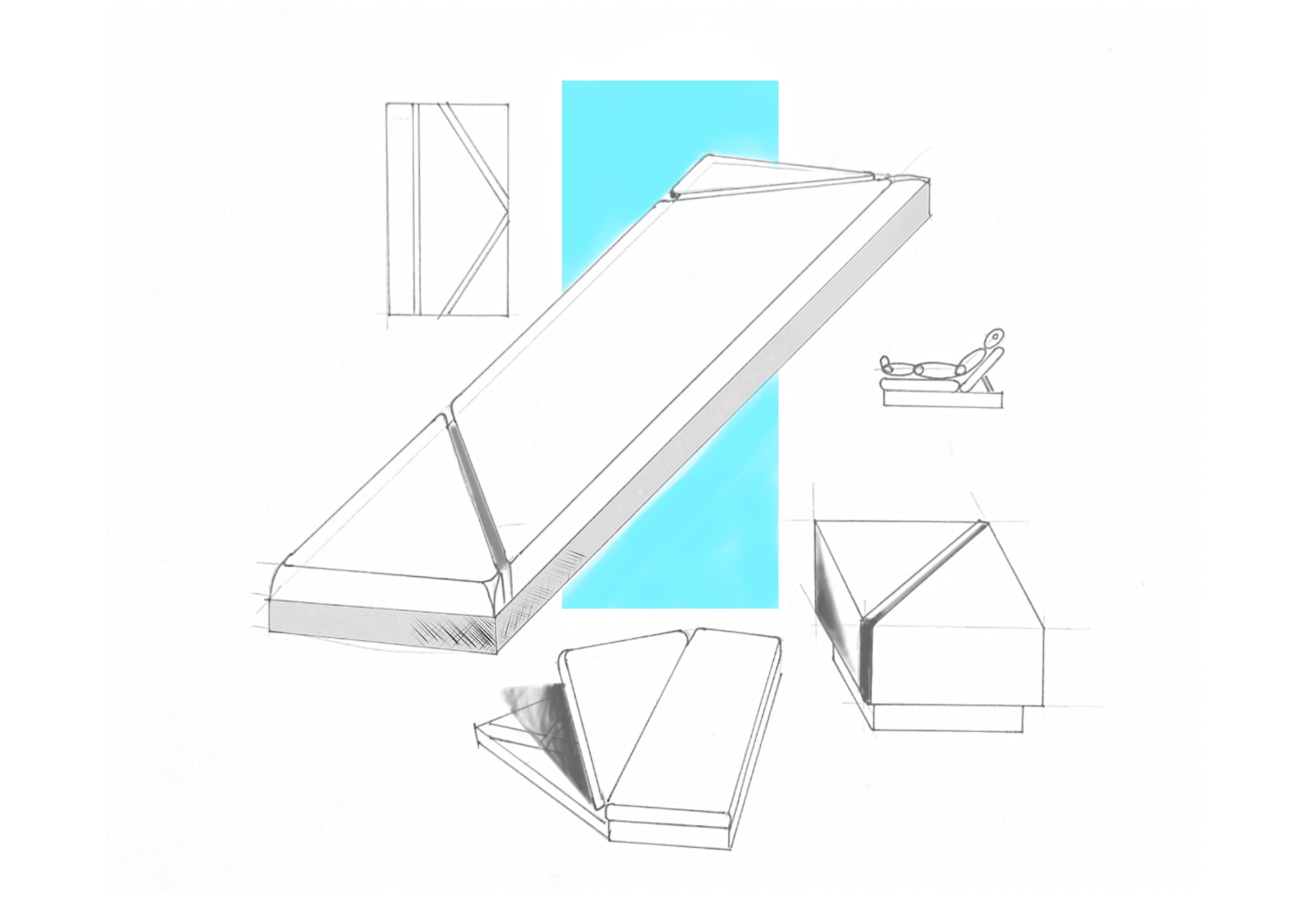
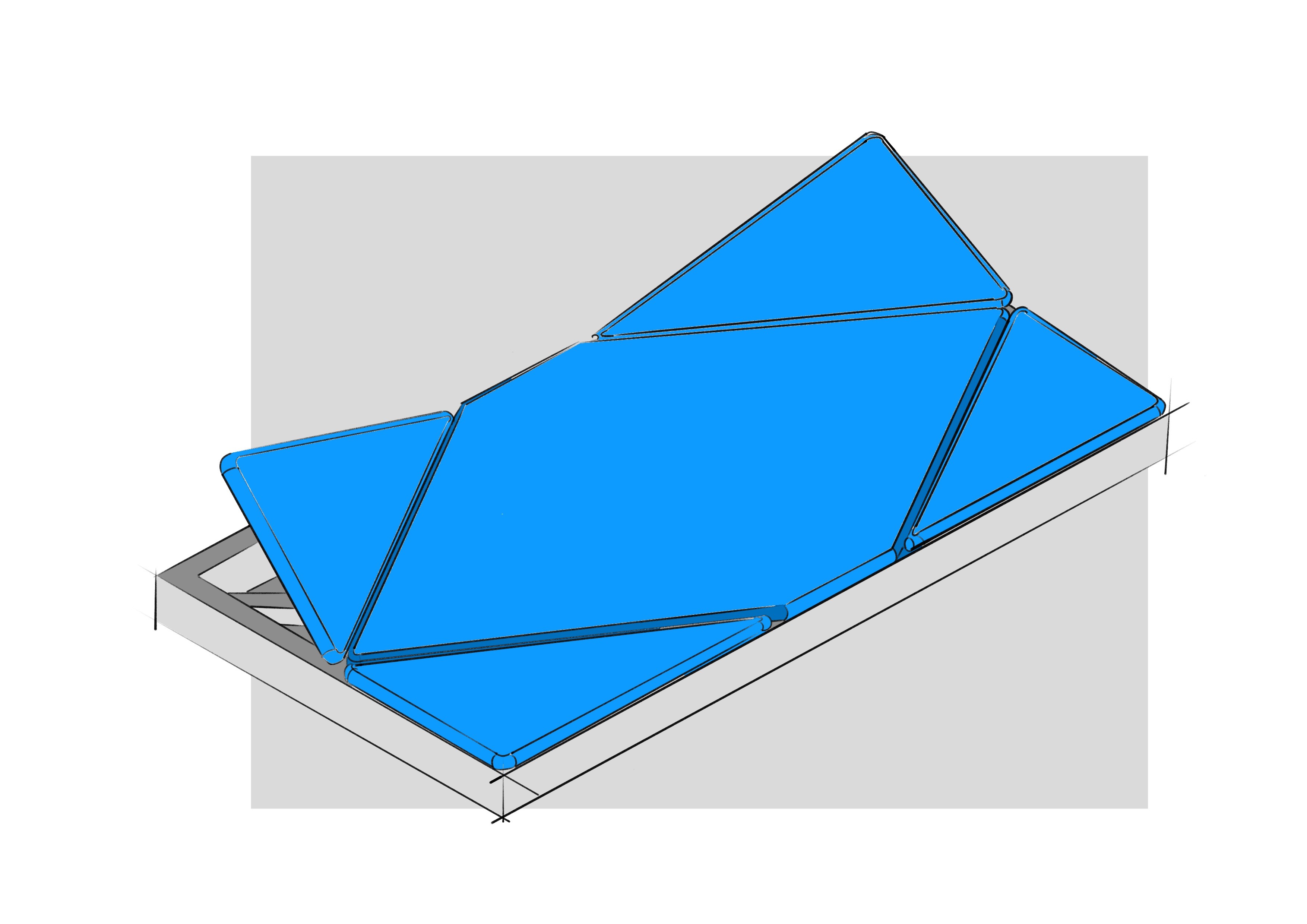
The design development process began with a concept focused on increasing seating capacity by incorporating corners that flipped upward, allowing each module of the furniture system to accommodate more users.
Early sketches and CAD renders also explored hinged side panels to create additional seating configurations.
Following feedback from peers and teachers, the design was refined and simplified, resulting in a cleaner, more cohesive form that improved both functionality and the overall design workflow.


The development and prototyping phase involved refining the design within a limited timeframe. A removable side table was introduced, slotting between each furniture module and flipping to function as either a tabletop or reading stand, increasing the system's versatility.
Material selection was carefully considered, with recycled HDPE sheets chosen for the structure and a bouclé fabric selected to complement the design while remaining cost-effective.
The project taught me so much from pattern making and sewing to CNC machining, and utilized so many existing skills to allow this project to be complete.


The development and prototyping phase involved refining the design within a limited timeframe. A removable side table was introduced, slotting between each furniture module and flipping to function as either a tabletop or reading stand, increasing the system's versatility.
Material selection was carefully considered, with recycled HDPE sheets chosen for the structure and a bouclé fabric selected to complement the design while remaining cost-effective.
The project taught me so much from pattern making and sewing to CNC machining, and utilized so many existing skills to allow this project to be complete.


